
We are pleased to announce that the Institute of Fundamental Technological Research of the Polish Academy of Sciences (IPPT PAN) has launched a new project funded under the ERA Fellowships programme (Horizon Europe). The initiative stems from our recent efforts to promote IPPT PAN as a host institution within the Marie Skłodowska-Curie Actions (MSCA).
ERA Fellowships provide complementary funding for excellent proposals submitted to MSCA that could not be supported directly due to budget constraints, and our project has been selected through this mechanism.
The project, entitled “Harnessing granzyme pathways: developing new antimicrobial therapies against resistant bacteria,” is carried out by Dr Vishma Pratap Sur under the scientific supervision of Prof. Paweł Paszek from the Department of Biosystems and Soft Matter.
Project Overview
Antimicrobial resistance (AMR) is becoming a serious global problem. Every year, more than 1.7 million people in Europe get infections that no longer respond well to common antibiotics. This makes treatments harder, increases healthcare costs, and creates an urgent need for new ways to fight harmful antibiotic-resistant bacteria.
MicroGRANZ, funded through the Horizon Europe ERA Fellowships, explores whether special proteins from our immune system called granzymes (A, B, M) and Granulysin can help us tackle this challenge. These proteins are normally used by cytotoxic T cells and natural killer (NK) cells to eliminate infected or damaged cells. However, new research shows that granzymes can also directly kill bacteria. This discovery opens the door to developing new, immune-based treatments that may help us combat dangerous, antibiotic-resistant infections in the future.
Scientific Goal
MicroGRANZ aims to determine how granzymes can be repurposed against multidrug-resistant pathogens by:
- examining how individual granzymes act on different bacteria,
- enhancing their activity through cooperation with Granulysin and Perforin,
- analysing how NK cells, cytotoxic T cells, and macrophages work synergistically with granzymes,
- improving granzyme delivery and stability using nanotechnology-based formulations (liposomes, nanoparticles, hydrogels).
The project focuses on uncovering mechanistic insights that may form the basis of future immunotherapies.
Interdisciplinary Methodology & Expected Impact
MicroGRANZ integrates high-content live-cell microscopy, advanced molecular microbiology, and machine-learning-based image analysis to study how granzymes target pathogenic bacteria. The project combines expertise in immunology, nanotechnology, systems biology, and computational modelling to uncover mechanisms of immune-driven bacterial killing.
We hope that this approach will provide new insights into immune antibacterial pathways, help identify effective granzyme combinations, and support the future development of immune-based antimicrobial strategies. It will also advance technologies in microscopy, data science, and nanodelivery, strengthen AMR research capacity at IPPT PAN, and promote broad interdisciplinary training and knowledge exchange. Ultimately, MicroGRANZ contributes to global efforts to combat antimicrobial resistance through innovative, immune-inspired solutions. The project is conducted in the Laboratory of Modelling in Biology and Medicine, using microbiology laboratories, hosted by group of Prof. Paszek.
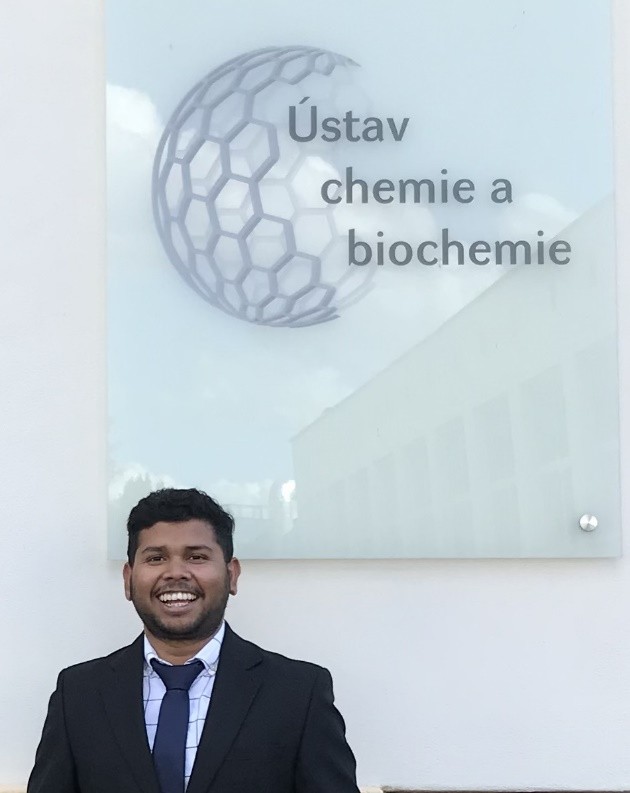
Dr. Vishma Pratap Sur joins IPPT PAN as an MSCA-ERA Fellow, bringing over nine years of international research experience spanning microbiology, infection biology, nanotechnology, medicinal chemistry, structural biology, and computational biology. He completed his PhD in Chemistry at Mendel University in Brno and BUT-CEITEC, where he developed several novel metal-based antimicrobial compounds, including the ruthenium complex RU-S4, effective against highly resistant Staphylococcus aureus strains.
In addition to his European research experience, Dr. Sur has worked in the United States as a visiting researcher at Utah State University, and in India as a Senior Research Fellow and project scientist at leading national institutes like CSIR-IICB, where he gained expertise in molecular biology, immunology, ophthalmology, and animal research.
During his postdoctoral work at the Institute of Biotechnology, Czech Academy of Sciences, and later at the Algatech Centre, he explored the antibacterial potential of organic molecules, peptides, and algal metabolites, performed computational drug design and molecular-dynamics simulations, and investigated cellular metabolism, immune signalling, and host-pathogen interactions using advanced imaging technologies. He also contributed to the characterisation of nanoparticles and quantum dots for biomedical applications, mentored students, and actively engaged in interdisciplinary collaborations.
Dr. Sur has authored 27 peer-reviewed publications, including 9 as first author, and his broad interdisciplinary background combining Microbiology, chemistry, immunology, nanotechnology, and computational modelling positions him exceptionally well to lead and execute the MicroGRANZ project.

Funded by the European Union. Views and opinions expressed are however those of the author(s) only and do not necessarily reflect those of the European Union or European Research Executive Agency (REA). Neither the European Union nor the granting authority can be held responsible for them.